
Half Marathon Goal

Nutrition for Endurance Athletes 101

Nutrition for Endurance Athletes 101

(Courtesy of Infinite Nutrition)

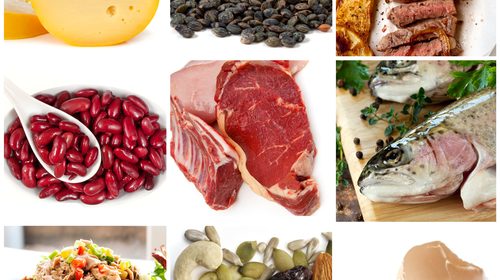
This article provides nutrition for endurance athletes: a platform for the ingredients recommended for optimal energy levels and performance:

Carbohydrates 101

Put simply, carbohydrates are sugars and starches that fuel our bodies much like gasoline fuels a race car. Each gram of carbohydrate contains ~4 calories worth of fuel. Just like a race car stores its fuel in a tank, the human body stores carbohydrates as glycogen in both our muscles and liver. These glycogen reserves are relied upon to stabilize blood sugars and allow for optimal muscle function. Runners who balance out their meal plates with 45-65% carbohydrate while meeting daily energy demands can expect to store about 2 grams (8 calories) of glycogen per pound of muscle tissue and an additional ~100-125 grams (400-500 calories) within the liver. This amount of glycogen supplies the energy needed to run for ~2 hours at a moderate intensity, making addition of carbohydrates necessary during long run efforts to avoid depletion and consequent dizziness (aka “bonking”) and profound muscle fatigue (aka “the wall”).

How many carbohydrates do athletes need?

Race Week: If you are gearing up for a race that lasts longer than 3 hours, enhance carbohydrate stores pre-race, aka “loading”, by incorporating 4-5 grams of easy-to-digest (low fiber) carbohydrate per pound of lean body weight each day the final 72 hours leading up to race day. A single-day or 48-hour carbo-loading protocol may be effective for shorter races, especially if the athlete is training through the race meaning no reduction in training volume is being implemented pre-race. Sample easy-to-digest carbohydrate options include pretzels, plain bagels, bananas, white pasta, white rice, potato, rice-based cereals, sports drinks, and energy bars.

Race Morning: Aim for 100-150 grams of easy-to-digest (low fiber) carbohydrate in the 2-3 hours leading up to race start. Be sure to allow 1 hour digestion time for every 200-300 calories consume. A sample pre-race meal to be consumed in the 2- 3 hours leading up to race start would be a plain bagel topped with a smear of peanut butter and honey plus 20-24 ounces of sports drink.

During Race: Aim for approximately ¼-1/3 your body weight (lbs) in grams each hour of training or racing beyond 45-90 minutes. For example, an 180-lb runner should aim for ~45-60 grams of carbohydrate each hour of training or racing. To maximize carbohydrate uptake into the muscles and extend endurance, choose products whose ingredient lists include multiple types of carbohydrate. Common carbohydrate sources used in sports foods include maltodextrin, glucose or dextrose, sucrose, and fructose. Common products used on race day include sports drinks, energy gels, energy bars, and energy chews.
Post-Race: Aim for 50-100 grams of carbohydrate, preferably in liquid form to promote rehydration as well as carbohydrate repletion, as soon as possible upon finishing a hard workout or race effort.

Protein 101

Scientifically speaking, proteins are large, complex molecules that make up 20% of our body weight in the form of muscle, bone, cartilage, skin, as well as other tissues and body fluids. During digestion, protein is broken down into at least 100 individual chemical building blocks known as amino acids that form a little pool within our liver and are used to build muscle, skin, hair, nails, eyes, hormones, enzymes, antibodies, and nerve chemicals. Some research has found that inclusion of small amounts of protein during prolonged activity can help enhance performance by sparing muscle glycogen as well as aiding fluid uptake. Protein also can help mute hunger that arises during longer efforts. Be careful about overdoing protein, however, as large amounts slow gastric emptying and can precipitate a “backlog” of nutrients of gut and consequent stomach distress and muscle fatigue/cramping.
How much protein do athletes need?

In Training: It is estimated that endurance athletes require approximately 1/2 -3/4 gram of protein per pound of lean body mass daily. Athletes on restrictive energy intakes should aim for the high end of this recommendation. For example, a 180 lb man with 10% body fat carries ~160-lbs of lean body mass and thus requires a range of ~80-120 grams of protein each day.

Race Morning: Include 10-20 grams of protein in the 2-3 hour leading up to race start to help stabilize blood sugars. Common pre-race protein sources include peanut butter, non-fat milk or yogurt, eggs, and energy bars.

During Race: If out on a training or race course longer than 4 hours, aim for up to 5 grams of protein hourly. Common sources include sports drinks, energy bars, as well as whole food alternatives like turkey jerky and peanut butter sandwiches.

Post-Race: A range of 10-20 grams of protein taken immediately post-race is sufficient to support muscle repair and immune function post-event. Common sources include milk, meal replacement shakes, and specialized recovery sports drinks.

Electrolytes 101

Replacement of electrolytes becomes instrumental in endurance bouts lasting longer than 1 hour, especially when training and racing in hot and humid conditions. The principle electrolytes include sodium (generally bound to chloride), potassium, magnesium, and calcium. These electrolytes are involved in metabolic activities and are essential to the normal function of all cells, including muscle function. An electrolyte imbalance has reported symptoms similar to dehydration: nausea, vomiting, muscle weakness, muscle cramping, muscle twitching, overall fatigue, labored breathing, “pins and needles”, and confusion.
How many electrolytes do athletes need?

Pre-Race: Athletes vulnerable to muscle cramping and fatigue as well as those competing in heat may benefit from increasing salt intake in the few days leading up to race day. Many of the carbo-loading options, such as pretzels, sports drinks, breads, and cereals, accommodate this. Similarly, on race morning, choosing saltier carbohydrate sources, such as a salt bagel, and sipping on a sports drink rather than plain water may help. Salt loading is not recommended for athletes on blood pressure medications.

During Race: Aim for 200-500 mg of sodium per standard bike bottle of water consumed (20-24 ounces) as well as smaller amounts of potassium, magnesium, and calcium. Note that too much sodium can lead to bloating and GI discomfort so be sure to account for all your sources, including sports drinks (100-200 mg per 8 oz), energy gels (25-200 mg per packet) and chews (20-210 mg per 3 pieces), salt packets (~200 mg per packet), and electrolyte capsules (~100-200 mg per capsule).

Post-Race: Sipping on a sports drink, rather than plain water, post-race will facilitate optimal rehydration of muscles, including replacement of lost electrolytes.

Water 101

Because water serves as the medium for all metabolic activity, helps to lubricate our muscles and joints, and also keeps our core body temperature in check, failure to take in enough fluids during a long run can have a dramatic negative impact on both health and performance. Therefore, determination of sweat rate and consequent fluid demands is extremely important for athletes. Practice weighing in pre- and post-workout and drink fluids so that no more than 2% of your body weight is lost during training and racing efforts.

How much water do athletes need to drink?

Daily: Drink half your body weight (in pounds) in fluid ounces or so urine runs pale yellow during the day. For example, a 150-lb man requires approximately 75 ounces of fluid daily.

Pre-Race: It is not uncommon to lose 1-2% of your body water weight overnight (one reason why so many like to weigh themselves in the morning). Unfortunately, this level of dehydration can have significant negative consequences on performance so be sure to sip on 16-24 ounces of fluid in the 1-2 hours leading up to race start or so that urine runs pale yellow.

During-Race: Aim for ½-1 liter or approximately 1 standard bike bottle (~20-24 ounces) per hour or so that urine runs pale yellow. It is important to note that over-hydration, also known as hyponatremia, can be just as dangerous as dehydration and is generally caused by consuming fluids, especially water, beyond that of what the body can absorb. Cardinal symptoms of over- hydration include clear urine, pressure headaches, nausea, vomiting, and confusion. To monitor hydration status, weigh in pre- and post-workout. The target is to stay within 2% of your pre-workout weight.

Post-Race: If you have lost more than 2% of your pre-workout weight during a workout or race, sip on fluids until urine runs pale yellow again. It is estimated that one needs approximately 20 ounces of fluid to replenish 1-lb of body weight.

Extra Credit Ingredient: Caffeine

A central nervous system stimulant, caffeine may help maintain blood glucose concentration and reduce power loss through its effects on the active musculature and nervous system that reduce fatigue and perceptions of effort, discomfort, and pain. Specific flavors of energy gels and chews are caffeinated at a dose of 25-50 mg pack. It is important to experiment with personal tolerance to caffeine as some athletes do not respond favorably to caffeine with symptoms such as a racing heart beat, muscle twitching, stomach distress, and anxiety serving as reason for avoidance.

How much caffeine should athletes consume?

Aim for 100-300 mg of caffeine (e.g., 1-3 cups of coffee) in the 2-3 hours leading up to race start and another 25-50 mg of caffeine taken hourly or implemented during the later stages of a race. Avoid consuming more than 500 mg of caffeine on race day. For best results, consider eliminating caffeine from the diet for 10 days prior to racing.

12525147_1012844672107157_8305596419726848428_o


Why Low-Fat Diets Will Hurt Your Running

Why Low-Fat Diets Will Hurt Your Running

This is part five of the Running Warrior Performance Nutrition Series

(parts of this were excerpts from ‘Fast Track’ by Suzy Favor-Hamilton and Jose Antonio, Ph.D.)


Low fat diets are sure-fire way to ruin your health, your looks, and your performance, period!  Not eating fat, especially the healthy kinds called MUFAs and PUFAs, is a huge mistake.  MUFAs and PUFAs are short for monounsaturated and polyunsaturated fats, respectively.

So what are these healthy fats that you need to eat?  Nuts of all kinds (e.g., cashews, almonds, peanuts [though technically it’s a legume not a nut]), fish fat (e.g., eat fatty fish such as salmon), and olive oil (e.g., use olive oil-based dressing).  

If you eat these 3 foods which have the right fats, you’ll be much healthier, and in the long-run (pun intended), you’ll be a better athlete.

Why should you eat healthy fats?  

  • The “healthy fats” aren’t stored as body fat as easily as the unhealthy fats such as the saturated variety.
  • You can eat more fat, still have a six-pack, and have more energy.
  • These fats are good for your heart!
  • Fats are a good way to get needed calories when you’re training heavily.  
  • Besides protein, fats are needed by your body!  If you don’t eat enough of the essential fats (linoleic and linolenic acid), you’ll feel lethargic and unhealthy.


So if you’re one of those who lives the “low-fat” lifestyle, STOP!  Fat is not the enemy.  Not enough fat will make your hair brittle, your skin dry, and your moods…well, moody!  Fat is needed for energy, hormone production, cell membrane structure and function, and a host of other very valuable things.  Let’s go over the different kinds of fats so that you can figure out which fats to limit and which fats to consume.  By the end of this, you’ll be a fat expert!


Three Main Kinds of Fat

The 3 main types of fatty acids are saturated, monounsaturated (MUFAs), and polyunsaturated (PUFAs).  A saturated fatty acid has the maximum possible number of hydrogen atoms bonded to every carbon atom.  Hence, it is “saturated” or completely filled with hydrogen molecules.  On the other hand, a fatty acid with one double bond is called “monounsaturated” because there are some “missing” hydrogens.. Fatty acids having more than one double bond between carbon molecules is polyunsaturated. (See Figure 1). All fat in foods have a combination of the three for the most part.  What’s different is the percentage contribution from each.  

Figure 1:  Chemical Structure of Fatty Acids

Saturated Fat
(i.e., saturated fatty acid)
Unsaturated Fat
(i.e., unsaturated fatty acid)
H   H
|   |
-C C-
|   |
H   H
H   H
|   |
-C = C-
Carbon-Carbon
Single Bond
Carbon-Carbon
Double Bond


Fat Facts – The Bad

Trans and Saturated Fats

These two fats are a deadly duo.  If you enjoy living, I’d suggest you limit your consumption of these fats.  An easy way to figure out if a fat is saturated is this.  Saturated fats are solid at room temperature.  So that delicious morsel of fat from that pork chop is probably high in saturated fat.  Trans fat (also known as trans fatty acids) are made when food manufacturers turn liquid oils into solid fats.  However, a small amount of trans fat occurs naturally in animal-based foods.  Just like saturated fats, trans fats are not your best friend.(7)  They can elevate the ‘bad’ cholesterol (LDL) and thus increase your risk of heart disease.  Next time, read a food label.  If it says “partially hydrogenated” or “hydrogenated” then there’s trans fats in it.  You’ll find trans fats in foods such as margarines, cookies, snacks, fried foods and even peanut butter.  (See Table below).


Foods that Contain Bad Fats

Butter

Margarine (especially the harder varieties)

Crackers

Cookies

Snack Foods

Baked Goods

Anything Made with “Partially Hydrogenated Vegetable Oil”

Certain Cuts of Beef (e.g. hamburgers)

Pork

Chicken Skin

Whole Milk

Whole Cheese


Does this mean that you should eliminate these foods completely from your diet?  No. First of all, it’s just not practical. And secondly, certain foods such as dairy and meat contain naturally occurring trans fats.  For instance, beef is a great source of zinc, iron, and protein.  Thus, eliminating beef from your diet isn’t the best option; instead, consume beef once or twice a week (rather than every day).  And then focus on the leaner protein sources (e.g., skinless chicken) or the healthy proteins with fat (e.g., salmon) most of the time.


Fat Facts – The Good

The MUFAs and PUFAs

Researchers have known for many years that high fat intake, at least in the form of olive oil, does not have any apparent negative health effects.  Furthermore, we know that monounsaturated fats are less likely to be stored as fat.  So keeping that svelte physique is not a problem if you eat the good fats.  For instance, in an eight week study done on mice, scientists found that non-exercising mice fed the beef fat gained more fat than those fed a monounsaturated fat.(8)  So what’s good for your pet mouse must be good for us, correct? Well in this case, yes.

MUFAs are healthy fats found in nuts, avocadoes, and oils.  Olive and canola oil are greater sources of MUFAs.  According to Chris Lydon, M.D., author of Look Hot, Live Long, she states that “unsaturated fats can help reduce circulating triglyercides and decrease your risk of cardiovascular disease, stroke, obesity, and diabetes!”  For example, a 30-week study in which subjects consumed lots of peanuts, which is high in MUFAs, lowered serum or blood levels of fat (specifically triglycerides) and reduced cardiovascular disease risk.(9)  


Table – A Brief List of Some Darn Good Fats!

Food % PUFA % MUFA % Saturated
Salmon 45 38 17
Herring 27 47 26
Walnuts 56 28 16
Cashews 6 70 18
Macadamia nuts 10 71 12
Almonds 17 78 5
Peanuts 29 47 18
Canola oil 37 54 7
Olive oil 8 75 16
Avocado 10 70 20


PUFAs represent quite a varied number of fats.  Most Americans get plenty of linoleic acid (an omega-6 PUFA) but usually not enough of linolenic acid (an omega-3 PUFA).  Linoleic acid is found in corn, cottonseed, and soybean oils whereas linolenic acid is found in high concentrations in walnuts and flax, along with some in soybean oil.  Thus, some PUFAs are more beneficial than others.  And then there are the omega-3 fats found in fish oil or fat (e.g., eicosapentanoic acid or EPA, docosahexanoic acid or DHA).  These fats are great for you; yet, most of you would rather stick a nail in your thumb then eat fish.  Most of us tend to eat too much of the omega 6 fats found in vegetable oils at the expense of not enough omega 3s.  You should eat a 1:4 ratio of omega 3s to 6s.  Yet most of you probably eat closer to a 1:20 ratio; meaning you consume 20 times more omega 6s than 3s.  So if in doubt about the kinds of fat to eat of the PUFA variety, do the following:  eat fish.  And if you don’t like fish, add some flax oil to your protein powder and get your good fats that way.  Fish is such a great source of fat (and protein) that it deserves special mention.

Somethin’ Fishy Here…

Fish is one of the best foods you can eat, period!  The protein is great and the fat has tremendous health benefits.  The omega 3 fats found in certain fish (for example salmon) are something that no athlete should be without.  Why are these so important?  It’s these tongue-twisters: eicosapentaenoic acid (EPA) and docosahexaenoic acid (DHA).  Greenland Eskimos who eat lots of fish, more fish than a starving shark, have a lower incidence of heart disease, arthritis, and psoriasis.  Many have attributed this to the large quantities of fish fat they consume.  The beneficial effects of fish fat are numerous; however, with regards to muscle, fish fat’s anti-inflammatory role may be of benefit to injured muscle.  Why is this good?  Inflammation is a normal and necessary component of skeletal muscle adaptation to intense exercise.  Take some fish fat, or better yet, eat lots of fish, and perhaps you’ll speed up your post-exercise recovery process.   The best sources of EPA and DHA are the cold-water fish such as salmon, sardines, mackerel, herring, trout and pilchards. EPA and DHA fatty acids make up 15-30 per cent of the oil content of these fish.  And unlike chicken, you want to eat the skins of these fish.  

Another cool thing with EPA is that it helps prevent muscle wasting with certain diseases.  This doesn’t mean you should wait until you’re wasting away before you visit the local fish market.  On the contrary, what it does indicate is that fish is a potent health food.  According to sports nutritionist, Douglas Kalman, M.S., R.D. of the Miami Research Associates, “Fish is the best source of the omega 3 fats, DHA and EPA; and it would behoove all runners to consume fish regularly.”  In summary, fish fats can do some amazing things (see Table below).


Table – Health Benefits of Fish Fat

  • Treatment with EPA improved blood vessel function in individuals with heart disease. (10)
  • EPA and DHA can reduce risk of death from heart disease.(11)
  • EPA can reduce injury to the heart.(12)
  • EPA and DHA can lower blood fat (triglyercides).(13) (14)
  • Besides the wondrous benefits of fish fat, the protein in fish is excellent was well.  There’s no single food that provides health and fitness related benefits as well as fish.  


Just the Fat Facts

Here’s an easy to follow summary on fat.

  1. Eat fish fat once a week; they lots of the healthy PUFAs (omega 3s).
  2. Use olive oil based salad dressing; the MUFAs are great for you.
  3. Eat nuts; they have lots of the healthy MUFAs.
  4. Fat should make up roughly 30% of your calories.   Don’t follow a low-fat diet!
  5. Limit intake of saturated and trans fats (basically avoid processed foods).  Perhaps eat red meat a twice per week; Eat whole eggs every other day.

If you are thinking of trying CLA, MCTs, or diacylglycerol to see if it helps you, talk to a sports nutritionist first.


Outdoor cross-country running in early sunrise concept for exercising, fitness and healthy lifestyle

Principles of Training for Distance Runners

by Sonja Friend-Uhl, USATF Certified Coach

The following principles should help guide you through the inevitable highs and lows of your training program. Keep this in mind: A training program can survive many changes as long as your determination remains strong.

1) If you need to adjust the training schedule because of travel, time conflicts at home or work, or weather problems, remember to follow an easy day/hard day pattern. Don’t run two hard days in a row to compensate for lost training. With this in mind, be sure to consider your Long Distance Runs as a hard day (as well as speed work, tempo runs, etc.).
2) Regular runs on hilly terrain are important component in building strength and stamina. If you live in an area where hills are not readily available make a point to get on a treadmill at least once every 10 days or so and use the incline to simulate a hilly course. If your marathon has significant hills, print an elevation map of the course and program the same hill components into your treadmill program during
this workout.
3) Adequate sleep during your training should be a priority (7 hours per night as a minimum for most people). This is vital to recovery from the wear and tear of workouts.
4) DO NOT run with an injury! If you sense the onset of one, rest or cross-train for 1-3 days to see if the injury of symptoms subside. If they do, resume gentle running. If they don’t, seek a medical opinion as to the nature of your injury and
continue to lay off running until cleared by the medical professional.
5) Never train in broken-down shoes. Quality running shoes last for a maximum of 500 miles or less before their support systems break down. Carefully gauge the condition of your shoes against the number of miles you have run in them. When you begin to feel regular flare ups of knee, shin, foot, or hip discomfort, it’s probably time for new shoes.
6) The best place to shop for shoes, apparel and accessories is a retail store that specializes in running shoes. Most clerks in such stores have been trained to fit you in the shoe that best matches your individual running mechanics and goals.
7) Follow the provided training schedules as best as you can. They work, but listen to your body and be smart and flexible in making training decisions. When in doubt use caution!
8) Distance Running can either be a solitary or social experience; I recommend making it social. Why? Training with a compatible partner or with a group of runners with similar goals can provide support, motivation, humor, information exchange, and in this case, professional coaching!
9)Stay informed of local weather forecasts and dress for running accordingly. When you travel to a marathon out of state with possible significant cooler temps than ours, be ready for anything. Generally you should wear less clothing than you think you’ll need for the expected temperatures, but it is best to layer with old clothes you won’t mind throwing off as you go through the race.
10) Remember the 10% Rule and the 25% rule!
10% Rule: Try to avoid increasing a single distance run or your total weekly mileage by more than 10%. Any more than this risks injury and burn-out.
25% Rule: a. Your weekly long run should equal approximately 25% of your total weekly mileage.
b.Always save 75% of your energy for the last 25% of the race!
11) Finally, it is essential that you plan to hydrate for runs exceeding an hour and consume energy bars, gels, fruit, a sports drinks etc. during runs of 90 minutes or longer.


Karvonen Formula

Karvonen Formula

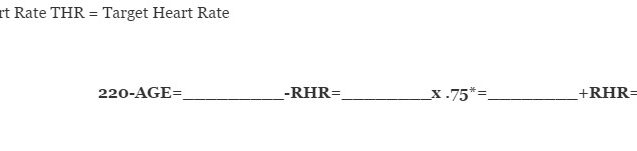
RHR – Resting Heart Rate THR = Target Heart Rate


220-AGE=_________-RHR=________x .75*=________+RHR=_______THR


The guidelines below are for apparently healthy individuals. Anyone beginning and exercise or fitness regimen should first have a complete physical with their doctor and receive approval to continue.

*Use 55-60% for beginner runners easy / recovery runs
*Use 65-70% for veteran runners easy/recovery runs
*Use 75% for daily and long runs (non-recovery)
*Use 85-90% for Tempo Steady State Runs (85%) and Tempo Intervals (90%)
*90% + for V02 Max and Interval (Speed) training sessions of 3-5:00 per interval with 2/3 recovery.


Protein to Power Your PR

Protein to Power Your PR

This is the sixth and final article in the Running Warrior Performance Nutrition Series

(parts of this were excerpted from ‘Fast Track’ by Suzy Favor-Hamilton and Jose Antonio, Ph.D.)

If you’re like most runners, you’ve probably been taught the importance of eating carbohydrates.  You need it for energy.  On the other hand, protein has sort of taken a back seat to carbohydrate.  In fact, it’s our experience that many runners subscribe to the many myths surrounding protein intake.  Protein is bad for your kidneys. Not true.  Too much protein is bad for your bones.  Not true.  I might get too big, like a bodybuilder, if I eat a lot of protein.  Not true.  And so on.  

Rule #1 – Never ever ever ever skimp on protein…NEVER!

Rule #2 – Always obey rule #1.


Here’s why dietary protein is so important.  Your body is made up mainly of two things: protein and water.  Proteins are part of your muscles, bones, cells, enzymes, antibodies, blood, organs, etc.  Even though the primary function of protein is to provide the needed amino acids for maintaining the health of our organs and tissues, the need for this macronutrient is elevated if you’re an avid exerciser.  


Why should runners eat more protein?

One reason:  Recovery!  We know some of you might think that you’ll get big muscles that’ll slow you down.  Now if you quit running and started bodybuilding, then yes, you would get bigger.  But running is a catabolic activity.  Meaning, your body’s adaptive response to distance running it is to get smaller.  Smaller and lighter runners tend to be the fastest as well.  You need to have healthy muscles to perform at your best.  Each time you run, you cause tremendous muscle protein breakdown.  

For instance, when was the last time you did repeat strides or speedwork on a downhill incline?  You probably got very sore 1 or 2 days afterward.  Right?  Well, that delayed-onset muscle soreness (also known as DOMS) is due to microtears in your muscles.  You’ve literally torn some of your muscle fibers into little bits and pieces.  In order to fix your muscle fibers, you need to give them the building blocks to do that.  That’s where amino acids or protein comes in.  Without the protein, you’ll have difficulty recovering.  Keep in mind that eating carbohydrates facilitates recovery as well; albeit in a different manner (see Ch 9 on Carbohydrates for more details).  


How much protein should runners eat?

Put it this way, mixing rice and beans isn’t going to do it!  And that ½ glass of skim milk in the morning isn’t enough.  A cup of skim milk has roughly 8 grams of protein.  If you’re a 120 lb runner, that means you should be drinking 15 cups of skim milk to meet your daily protein needs!  Now mind you, that’s if your only protein source is skim milk.  Of course, you’ll be eating other foods.  But this gives you an idea of how much you need to consume to meet your daily requirements.  

As a runner, you need approximately 1.5 to 2.0 grams of protein daily per kilogram of body weight.  But since most of us don’t like working in kilograms, we generally recommend you eat 1 gram of protein per pound of body weight daily.  That’s slightly higher than the 2.0 g/kg/day recommendation.  But it’s easier to remember.  And don’t believe the naysayers who claim that all that protein is harmful to you.  Nothing could be further from the truth.  


Is ‘too much’ protein harmful?

Protein intakes as high as 1.3 grams of protein per pound of body weight have been shown to have no effect on kidney function.(15, 16)  In fact, Darryn Willoughby, Ph.D., an Associate Professor of Exercise Physiology states that “there’s absolutely no evidence that consuming protein at levels greater than the RDA has any harmful effects in normal healthy adults.”  Another concern is bone health.  Does eating a lot of protein compromise your bone mineral content?  Yes, it is possible that too little protein causes long-term harm to your bones!(17)


Which protein sources are best?


Milk

There’s more to milk than just using it to dip Oreo cookies!  Milk is a complete protein and therefore contains all of the essential amino acids.  Generally we’d recommend you consume whole milk if you’re the kind of person who skips meals or eats little fat.  However, if you eat clean (and follow our advice), than skim milk should suffice.  


Beef

Don’t let the fat in beef scare you.  In fact, there’s a huge difference in fat content between different cuts of beef (see table below).


Fat Content in Beef

70% lean, 30% fat (ground beef)

80% lean, 20% fat (ground chuck)

85% lean, 15% fat (ground round)

90% lean, 10% fat (ground sirloin)


A simple method for remembering which beef source has the least fat content is to remember that those at the beginning of the alphabet (ground Beef) have the most fat and those at the end of the alphabet (ground Sirloin) have the least.  


If you remember one thing about beef, it’s ZIP.  ZIP stands for zinc, iron, and protein.  Beef has lots of all three.


Nutrients in Top Sirloin Beef

6 oz. Serving – trimmed of fat and broiled

326 calories

51.6 grams of protein

11 mg zinc

5.7 mg iron


Also, lean beef is a healthy protein choice.  For example, one study published in Nutrition looked at overweight women who exercised and consumed a restricted calorie diet with lean beef or chicken as the main protein source.  Both groups lost similar amounts of weight, body fat, total cholesterol and LDL cholesterol (the bad cholesterol).(18)  


Chicken

Chicken is a great protein; similar to beef, the fat content of chicken can vary dramatically especially if you eat the skin.  For instance, a 100g serving of light meat chicken with skin contains 222 calories and 10.85 grams of fat compared to 173 calories and 4.51 grams of fat if you remove the skin.  That’s more than double the fat if you eat the skin.  Eating chicken as part of a well-rounded diet can help decrease total cholesterol and LDL cholesterol.(19)  We’d recommend you remove the skin.  Also, white meat has less fat than dark meat.  However, if you eat little fat, try to eat the dark meat chicken.  


Nutrients in Light and Dark Meat Chicken

Dark meat – 1 cup (chopped up), cooked, roasted, meat only (no skin).

287 calories

38 g protein

14 g fat


White meat – 1 cup (chopped up), cooked, roasted, meat only (no skin).

242 calories

43 g protein

6 g fat


Eggs

Some experts consider the amino acid profile of eggs to be the best of all food sources.  Eggs are a rich source of thiamine, riboflavin, pantothenic acid, folic acids, vitamin B12, biotin, vitamin D, vitamin E, and phosphorus.  Despite the fact that egg yolks have a bad reputation, it’s not entirely deserved.  In a study from the Journal of the American College of Nutrition, they examined 27,000 individuals(20) and found “the daily nutrient intake of egg consumers was significantly greater than that of non-consumers.”  That is, the egg consumers had a greater daily intake of vitamins B12, C, E, and A.  Interestingly, individuals who ate four or more eggs daily had lower blood cholesterol levels than those who ate one egg or less daily. Not only is egg protein great but it’s very affordable.  In a dozen eggs, you get 80+ grams of protein for less than a dollar!  


Macronutrients in an omelet (3 large egg whites, 1 large whole egg)

Calories – 206

Protein – 23 grams

Carbohydrate – 2 grams

Fat – 11 grams


Fish

Fish is a complete protein that many would rate as the single best protein food source.  Why? Eating fish has some amazing benefits.  Particularly, the healthy fat in fish (eicosapentanoic acid and docosahexanoic acid) is something that you won’t find in our other proteins.  Fish improves your mood, is great for your heart and is an effective anti-inflammatory nutrient.  Just one serving per week will confer these benefits; however, more frequent consumption is even better.


Meal Replacement Powders

Sometimes you don’t have time to fix a ‘real’ meal. So the best alternative is to drink a protein powder or meal-replacement powder.  Most of these mixes are high in protein, have moderate to no carbohydrate, and have very little to no fat.  They use three main protein sources: whey, casein, and soy.  


Whey

Whey is a complete protein and is particularly high in the branched-chain amino acids (leucine, isoleucine, and valine) and glutamine (an immune-boosting amino acid).  Whey is considered a ‘fast’ protein.(21)  If you eat a serving of whey on an empty stomach, levels of blood amino acids peak about 1 hour afterwards and return to baseline by 3-4 hours.  Thus, whey is a very anabolic protein (i.e., great for muscle building or recovery).  In fact, combining whey protein with a high-glycemic carbohydrate (e.g., maltodextrin, glucose, and sucrose) may be the ideal post-exercise meal.


Casein

Casein is the “opposite” of whey. Casein, a ‘slow’ protein, has a lower anabolic effect (31% versus 68%) when compared to whey.  However, casein has a very profound anti-catabolic effect; meaning that casein inhibits protein breakdown.(22)  Because casein is digested slowly, it produces a slow but steady rise in amino acids.  Blood levels of amino acids peak 1 to 2 hours after eating casein (but they don’t get as high as when you eat whey).  But, blood amino acid levels stay elevated for up to 7 hours.  Casein is a great protein to take before going to bed.  Because it’s absorbed slowly, you’ll get a steady flow of amino acids into your body.  That’s good for recovery.


Soy

Soy Isolate is the best non-animal source of protein. Though soy is not commonly consumed by Americans, there are various soy products (e.g., soy milk, soy-based protein powders) at your local health food store.  Soy protein contains potent anti-oxidants that provide significant health and anti-cancer benefits.  This may be due to the presence of isoflavones, saponins, phytic acid, and other phytochemicals.  One recent study found that a soy-based meal replacement formula lowered body weight, fat mass, and LDL cholesterol.”


Comparison of Some Popular Meal-Replacement Powders


Brand/Product Calories Protein Carbohydrate Fat
EAS Myoplex Powder (1 packet) 270 42 g 23 g 3.0 g
GNC Meg-MRP (1 packet) 280 40 g 22 g 3.5 g
Garden of Life (Vegan) (2 Scoops) 280 34 g 30 g 4.0 g
Max Muscle A.R.M. (Recovery) (2 scoops) 250 28 g 32 g 0.5 g


How many protein-containing meals should I eat?

As a general rule, try to consume a lean protein source 4-6 times daily (or every 3 hours).  If you don’t have time for a ‘real’ meal, try a protein bar or a meal-replacement shake.  It’s especially important you get protein (and carbohydrates) immediately after you run.